
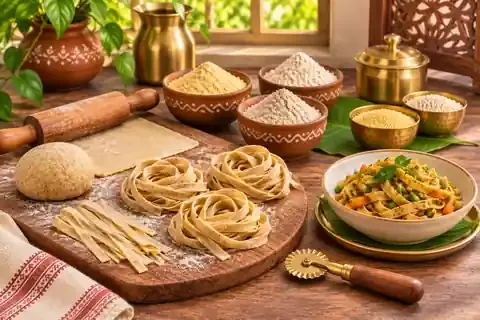
Millet Pasta: Homemade Recipe, Best Flours and Cooking Tips
Millet pasta is pasta made from millet flour such as ragi, thinai, or kambu instead of maida or durum wheat. You can make it at home with any millet flour, a little starch or whole wheat to hold the dough together, and about 40 minutes. It is usually higher in fibre than refined pasta and goes well with Indian sauces.
Millets have no gluten, so the dough behaves differently from wheat dough. A good binder, a short rest, and gentle cooking make all the difference.
How is it different from regular maida pasta?
Most packaged pasta is made from refined wheat (maida) or durum wheat semolina. The gluten in wheat gives pasta its stretch and firm bite. Pasta made from millet relies on starch instead, which changes a few things:
- Texture: softer and slightly grainy, closer to a fresh noodle than a firm macaroni.
- Colour: depends on the flour, from pale cream (thinai) to deep brown (ragi).
- Flavour: mildly nutty or earthy, which suits spiced Indian sauces.
- Cooking time: shorter, and it goes from just right to soft quickly.
- Binding: it needs a binder or some wheat flour to hold its shape.
Is pasta made with millet flour healthy?
It can be a better everyday choice than maida pasta, mainly because millet flour is usually whole grain:
- Whole grain flour keeps the bran, so it gives more fibre than refined flour.
- All common millets are naturally gluten-free, so you can make a gluten-free pasta at home.
- Millets provide minerals like iron and magnesium, and ragi is a good source of calcium.
The research is still limited. A study published in LWT tested pasta made from different millet varieties. It found the millet pasta had less rapidly digestible starch than commercial gluten-free pasta. The same study noted lower protein digestibility than wheat pasta and a grainier texture.
What you serve with it matters as much as the flour. A vegetable-rich sauce and a moderate portion keep the plate balanced. If you manage diabetes or a gluten-related condition, check with your doctor or dietitian before making it a regular meal.
Store-bought millet pasta varies a lot. Many packets blend millet with maida or semolina, so the ingredient list tells you how much millet is really in the pack.
Which millet flour works best for pasta?
Each millet has its own colour, flavour and handling. If you are new to millets, this overview of the types of millets covers their regional names and everyday uses.
| Flour (Tamil name) | Taste and colour | How the dough behaves | Works well for |
|---|---|---|---|
| Finger millet/ragi (kelvaragu) | Earthy, deep brown | Firm; needs a binder to stay smooth | Ragi pasta with tomato or podi |
| Foxtail millet (thinai) | Mild, pale cream | Soft and the easiest to roll | First-time pasta makers |
| Pearl millet (kambu) | Nutty, greyish | Dense; best with freshly milled flour, since it turns bitter faster | Short shapes in spicy sauces |
| Multi-millet atta | Balanced | Even, pliable texture | Everyday family pasta |
| Whole wheat atta (as a helper) | Neutral | Adds stretch | Half-and-half beginner dough |
If you choose ragi pasta for the calcium and fibre in finger millet, these ragi benefits explain why the grain has stayed a staple in Tamil homes.
For a balanced, less earthy flavour, a multi-millet millet atta is the easiest base to start with. If you need the dough to be strictly gluten-free, read the pack’s ingredient list first.
How to Make Millet Pasta at Home
This millet pasta recipe makes about two servings. Choose the gluten-free dough or the half-and-half dough, depending on who you are cooking for.
Fully gluten-free pasta dough
- 1 cup (about 120 g) thinai or ragi flour
- ¼ cup tapioca flour (maravalli kizhangu maavu) or rice flour (arisi maavu)
- 1 tbsp psyllium husk powder, or 1 tbsp ground flaxseed soaked in 3 tbsp water
- ¼ tsp salt
- 1 tsp oil
- About ½ cup hot water, plus more as needed
Half-and-half beginner dough
- ½ cup millet flour
- ½ cup whole wheat atta
- ¼ tsp salt and 1 tsp oil
- About ⅓ cup warm water
Method
- Scald the flour. Mix the flours, binder, and salt in a bowl. Pour in hot water a little at a time and stir with a spoon. The hot water partly cooks the starch, the same trick used for kozhukattai and idiyappam dough, and helps millet dough hold together.
- Knead. Once it is cool enough to handle, add the oil and knead for 3 to 4 minutes into a smooth, soft dough. If the edges crack, add water a teaspoon at a time.
- Rest. Cover with a damp cloth and rest for 20 minutes.
- Roll. Roll the dough between two sheets of butter paper to about 2 to 3 mm thick.
- Shape. Cut long strips for fettuccine-style pasta, or small squares pinched in the middle for bows. You can also wrap thin ropes of dough around a skewer for a fusilli-style twist, or press the dough through an idiyappam press for thin noodles.
- Cook or dry. Cook it fresh straight away, or spread it on a cloth in a well-aired spot until fully dry and hard.
How to cook homemade pasta without it turning mushy
- Use plenty of water, about 1 litre for every 100 g of pasta, so the pieces move freely.
- Salt the water well before adding the pasta.
- Fresh homemade pasta cooks in about 2 to 4 minutes. It is ready about a minute after it floats.
- Dried homemade pasta takes about 5 to 7 minutes. For packaged pasta, start tasting 2 minutes before the time on the pack.
- Stir gently in the first minute so the pieces stay separate.
- Keep the water at a steady, gentle boil to help delicate shapes hold together.
- Drain and toss it into a hot sauce straight away, since it firms up as it cools. Keep a little cooking water aside to loosen the sauce.
Indian-style recipes to try
Each millet pasta recipe below uses about 2 cups of cooked pasta and serves two.
- Masala red sauce pasta: Sauté onion and garlic, add chopped tomato, chilli powder and a pinch of garam masala, and cook down to a thick sauce. Add capsicum, toss in the pasta, and finish with coriander.
- Podi pasta: Heat gingelly oil, splutter mustard seeds and curry leaves, then toss the pasta with 2 tablespoons of paruppu podi or poondu podi. It is ready in about 10 minutes.
- Kuzhambu-style one-pot pasta: Make a light tamarind and tomato base with sambar powder and vegetables. Add the pasta for the last 3 minutes of simmering for a warm, soupy bowl.
- Pepper garlic vegetable stir-fry: Stir-fry beans, carrot, and cabbage with crushed pepper and garlic in groundnut oil, then fold in the pasta.
The podi and cold-pressed oils in these dishes belong to the same everyday pantry as the millet flours, the kind of kitchen the Pure Organic foods range is built around.
How to store it
- Fresh, uncooked: dust with flour and keep in an airtight box in the fridge for up to 1 to 2 days.
- Dried: store in an airtight jar on a cool, dry shelf and use within 2 to 3 weeks.
- Frozen: freeze in small nests and cook straight from frozen, adding about a minute to the cooking time.
- Cooked: refrigerate for up to a day and reheat in the sauce with a splash of water.
To keep a few millet flours ready for pasta, dosa, and rotis, the flour batter mix category has ragi, thinai, and kambu flours in one place.
Quick Tips
- Add besan for protein. A tablespoon of besan (kadalai maavu) per cup of millet flour adds protein and helps with binding, and it is naturally gluten-free.
- Colour it with vegetables. Replace part of the water with spinach or beetroot purée for green or pink pasta that kids enjoy.
- Roll ragi dough a little thicker. It holds its shape better at about 3 mm.
- Use fresh flour. Millet flour stays fresh for less time than wheat flour, so store it airtight and keep it in the fridge in summer.
- Batch-make millet pasta on a weekend. Dry it fully, and you have a quick base for weekday dinners.
- Keep the dough covered while shaping. A damp cloth keeps the edges moist and smooth.
Frequently asked questions
Is millet pasta gluten-free?
Pasta made only from millet flour and a gluten-free binder like tapioca or psyllium is gluten-free pasta. Packets that blend millet with maida or semolina contain gluten. The question of are millets gluten free has a simple answer for the grains themselves, but flours can pick up traces of gluten during milling.
Can I make this millet pasta recipe without a pasta machine?
Yes. A rolling pin and a knife are enough for flat strips, and a skewer gives you twisted shapes. An idiyappam press, which many South Indian kitchens already have, makes thin noodles easily.
Is ragi pasta good for kids?
Ragi pasta can be a good way to add finger millet to a child’s meals, especially with a mild tomato sauce. Start with a half-and-half dough if your child is new to ragi’s earthy taste. A fresh Ragi Flour gives a smoother dough and better flavour.
Why does my homemade pasta break while cooking?
It usually needs more binder, a longer rest, or a slightly thicker roll. Scalding the flour with hot water and cooking at a gentle boil, not a rolling boil, also helps the pieces hold together.
Can people with diabetes eat pasta made from millet?
Whole grain millet pasta can fit into a diabetes-friendly meal plan when the portion is moderate and the plate includes plenty of vegetables and some protein. How it affects blood sugar varies from person to person, so check with your doctor or dietitian and monitor your readings.